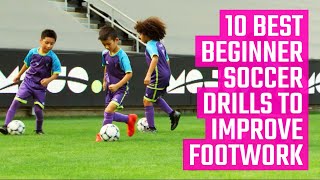
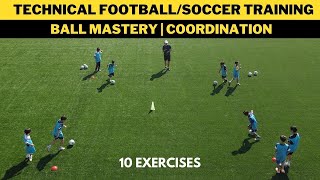
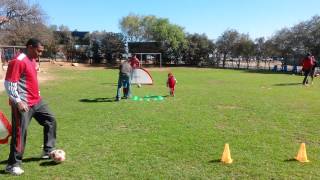
Kicking a soccer ball is simple, but building the coordination, control, and confidence of a young player requires practice. The best way for kids to improve is through structured, engaging drills that feel more like play than work. Whether you're a parent, coach, or just looking for backyard activities, the right drills can make a huge difference.
This guide outlines essential soccer drills designed for children, focusing on developing core skills in a positive environment. Remember, the primary goal at a young age should always be enjoyment and a love for the game.
Essential Fundamentals: The First Four Drills
Before diving into complex plays, every young soccer player must master ball familiarity and basic control. These four drills are the cornerstone of skill development.
1. The Dribbling Square
Purpose: To improve close ball control while changing direction and keeping the head up.
Set up four cones in a small square (5x5 yards). The player must dribble the ball from cone to cone using different parts of their feet—inside, outside, sole, and laces. Encourage them to keep the ball close and use small, controlled touches. To increase difficulty, time them or have them use only their weaker foot.
2. The "Follow the Leader" Weave
Purpose: To practice dribbling with speed and changing direction in response to a visual cue.
Line up 5-6 cones in a straight line, about one yard apart. A coach or parent leads, and the child follows, weaving in and out of the cones while dribbling. The leader can vary their speed, forcing the child to react. This drill is fantastic for building agility and dribbling under light pressure.
3. One-Touch Passing Pairs
Purpose: To develop accurate passing and the ability to receive a ball cleanly.
Pair up players about 5-10 yards apart. They pass the ball back and forth using one touch to control and a second to pass (two-touch passing). Once comfortable, they can progress to strictly one-touch passing. Emphasize using the inside of the foot for accuracy and locking the ankle.
4. Wall Ball
Purpose: To increase repetition and improve first touch, passing, and receiving without a partner.
A player stands 5-10 feet from a solid wall or rebounder. They pass the ball